Angka Kala Fortress
Historical Significance
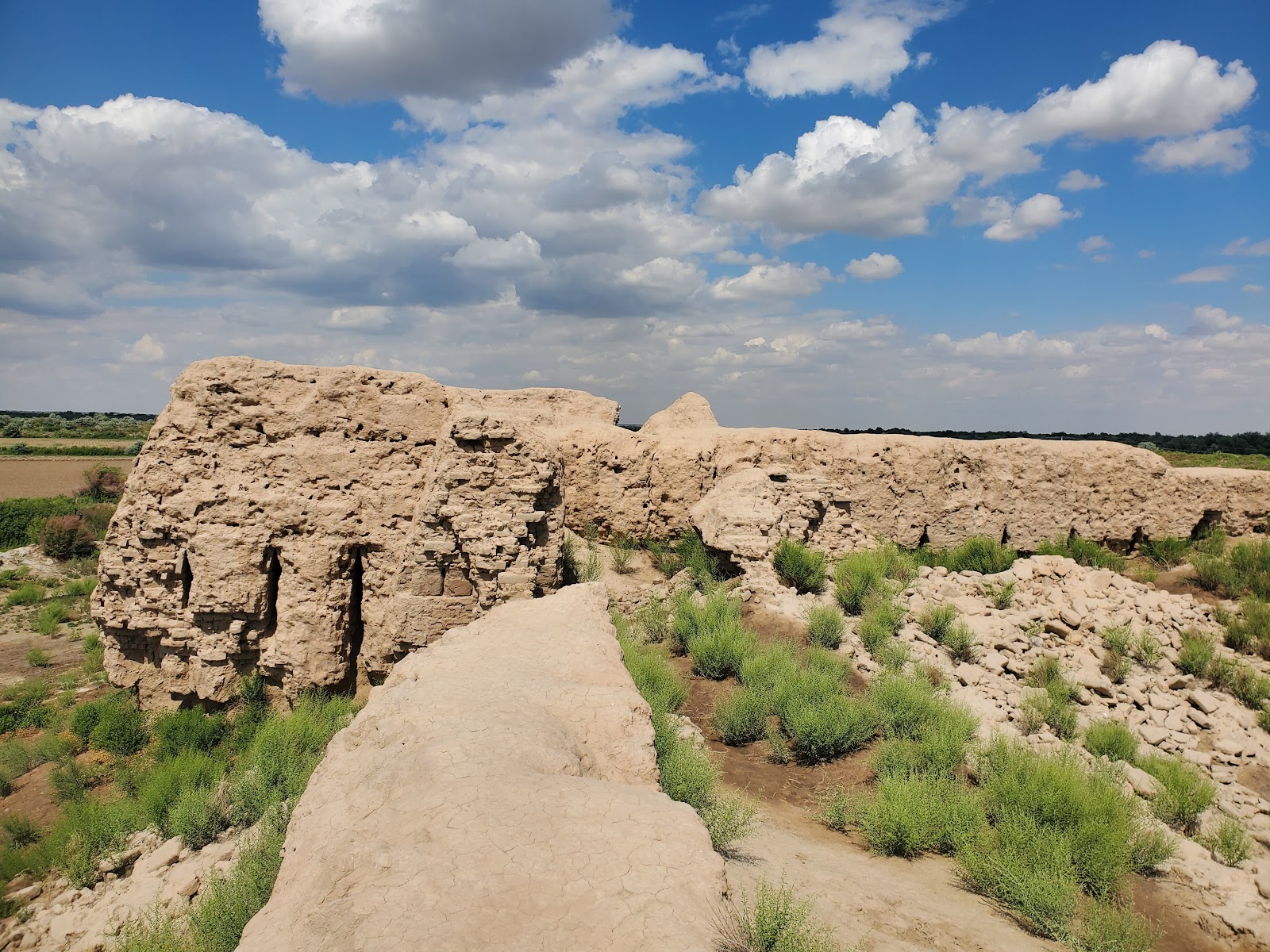
Angka Kala fortress dates from the Late Antique period of Khorezm, around the 1st to the 3rd centuries AD - the time of the Kushan Empire. It seems to have been established on the eastern edge of Khorezm to guard the main caravan trade route to the east. Here you can still see a corridor formed by the outer and inner walls, rectangular towers, loopholes shaped for shooting that are cut through the exterior wall, and towers in a single line.
Architectural Features
The fort is small but well defended. It is almost exactly square-shaped, measuring about 90 metres along each side, and its corners are oriented towards the four cardinal points. It has double walls set on a paqsa plinth with a 2.5 metre wide corridor in between to accommodate the archers' gallery.
Defensive Design
There is a projecting square tower at each corner providing defensive cover for the adjacent curtain walls. These towers seem to have been originally built several metres above the height of the curtain walls. The entrance to the fort was in the middle of the south-east wall, defended by two rectangular towers. The curtain walls and towers contain just a single row of arrow-shaped loopholes.
Strategic Location
Located on the eastern edge of Khorezm, this fortress played a crucial role in protecting the important caravan trade routes that connected the Central Asian kingdoms with regions to the east. The strategic positioning and well-designed defensive architecture demonstrate the sophisticated military knowledge of the Kushan period.
Historical Period: 1st - 3rd centuries AD (Kushan Empire)
Fortress Size: Approximately 90 metres per side (square-shaped)
Key Feature: Double walls with 2.5 metre wide archer corridor
Purpose: Defense of caravan trade routes