Koi-Krylgan-Kala Fortress
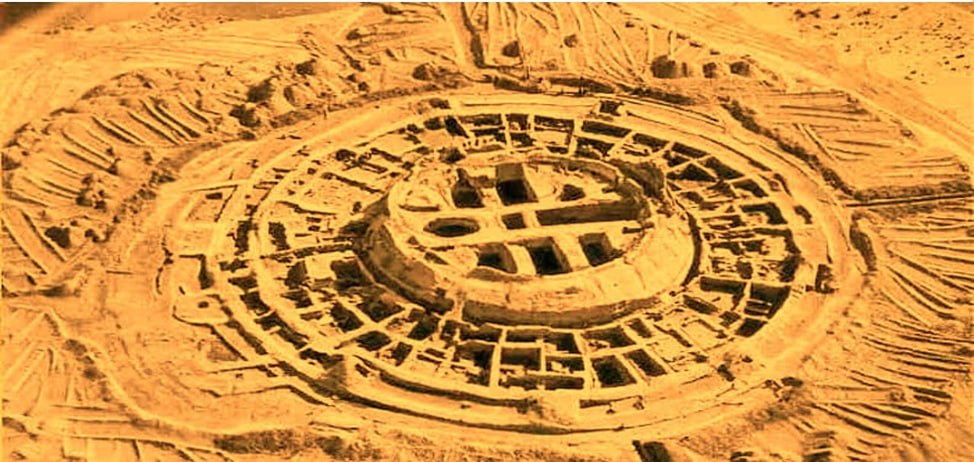
The Fortress of Dead Rams
The name Koi-Krylgan-kala means "fortress of dead rams." The fortress is located 30 km northeast of the city of Turtkul in the Ellikkala region of the Republic of Karakalpakstan. The fortress was discovered by archaeologists of the Khorezm expedition in 1938. They were surprised by its layout, which had never been seen before in Khorezm.
Unique Circular Architecture
Initially, it was a round two-storied building, fortified with a double ring wall with loopholes and towers. The defensive wall with nine towers was a reliable fortification. The clay structure was of colossal size: the diameter of the central building was 42 meters, the height in the best-preserved part was about 8 meters, and the diameter of the entire structure was 90 meters.
Oldest Monument of Khorezm
Scientists were able to establish that it was the oldest of monuments of Ancient Khorezm, dating back to the 4th - 3rd centuries BC. When studying the central building, it was found that during the construction process, the ancient architects proceeded from calculations that made it possible to use the building for astronomical observations. Observation capabilities were built into the building's design, including the location of the windows.
Religious and Astronomical Purpose
The fortress is presumed to have been a Zoroastrian temple dedicated to the water goddess Anahita and the sun god Siyavush. Its inhabitants left ossuaries in the fortress, and some speculate that ritual ceremonies were once held here at the tombs of ancient Khorezmian rulers. A separate theory suggests that astronomical research was also carried out at the temple. The findings from the archaeological excavation site allowed scientists to conclude that the Koi-Krylgan-kala fortress was a temple-tomb, on the territory of which astronomical observations and ritual ceremonies were carried out.
Location: 41.755322726323016, 61.11782303276032
Period: 4th-3rd centuries BC (oldest monument of Ancient Khorezm)
Structure: Circular, 90m diameter with 42m central building
Purpose: Temple-tomb with astronomical observation capabilities
Dedications: Goddess Anahita and sun god Siyavush